theairosproject / systems
Marketing and Growth: Systems to Grow Without Noise
Sustainable growth does not come from viral moments or hacks. It comes from systems — repeatable processes that attract the right people, nurture them with genuine value, and convert them into customers or community members. This guide shows you how to build those systems from scratch.
Marketing as a System
Most people approach marketing as a series of disconnected activities. They post on social media when they feel like it, send an email when they have something to announce, and update their website once a year. This approach feels like a lot of work because it is — every action requires a fresh decision, fresh motivation, and fresh creative energy.
System-based marketing is fundamentally different. You design the process once, then execute it repeatedly. Your content calendar tells you what to publish and when. Your email sequences run automatically based on user behavior. Your funnels guide people from awareness to decision without you manually intervening at each step. The system does the heavy lifting while you focus on the creative and strategic work that actually requires a human brain.
The shift from ad-hoc marketing to systematic marketing typically happens in three phases. First, you document your current activities and identify what is working. Second, you build repeatable processes around those winning activities. Third, you automate the repetitive parts and optimize based on data. Each phase reduces your daily effort while increasing your results.
The biggest misconception about systematic marketing is that it feels robotic or inauthentic. The opposite is true. When you automate the logistics, you free up energy for the creative work that makes your brand feel genuinely human. The best marketers in the world have systems for everything except the actual creative spark — and that is exactly why their creative work stands out.

Automated Email Marketing
Email remains the highest-ROI marketing channel, returning an average of thirty-six dollars for every dollar spent. But only when it is done systematically. Here is how to build an email system that works while you sleep.
The Welcome Sequence
Every new subscriber should receive a welcome sequence of five to seven emails over two weeks. This is your opportunity to establish the relationship, deliver immediate value, and set expectations. Email one arrives immediately and delivers whatever you promised in exchange for the signup. Emails two through four provide your best content — the pieces that consistently get the most engagement and sharing. Emails five through seven introduce your products or services with context about how they help.
Write this sequence once and it runs for every new subscriber automatically. Over time, you optimize it based on open rates, click rates, and conversion data. A well-tuned welcome sequence can convert fifteen to twenty-five percent of subscribers into customers within the first month.
Behavior-Based Sequences
Beyond the welcome sequence, your email system should respond to what people actually do. Someone who clicks on a link about pricing should receive different follow-up than someone who clicks on an educational article. Someone who visits your checkout page but does not buy should get a cart abandonment sequence. Someone who has not opened an email in sixty days should get a re-engagement campaign.
This level of personalization sounds complex, but modern email platforms make it straightforward. ConvertKit, ActiveCampaign, and Mailchimp all support behavior-based triggers. The setup takes a few hours, but once running, these sequences feel remarkably personal to the recipient while requiring zero ongoing effort from you.
Newsletter System
Your regular newsletter is the heartbeat of your email marketing. It keeps your audience engaged between automated sequences and gives you a platform for timely content. The key to a sustainable newsletter is having a template and a process. Decide on a consistent format — maybe it is three links with commentary, or a main essay with a resource section, or a curated roundup of industry news. Block time each week to write it. Use the same structure every issue so your audience knows what to expect and you know exactly what to produce. Consistency beats creativity in newsletter marketing.
Email Tools Comparison
ConvertKit — Best for creators and solo businesses. Clean interface, excellent automation builder, and landing page creator included. Pricing based on subscribers.
ActiveCampaign — Best for businesses that need advanced automation and CRM integration. More powerful but steeper learning curve. Worth it for complex customer journeys.
Beehiiv — Best for newsletter-first businesses. Built-in monetization, referral programs, and growth tools. Modern alternative to Substack with more control.
Conversion Funnels
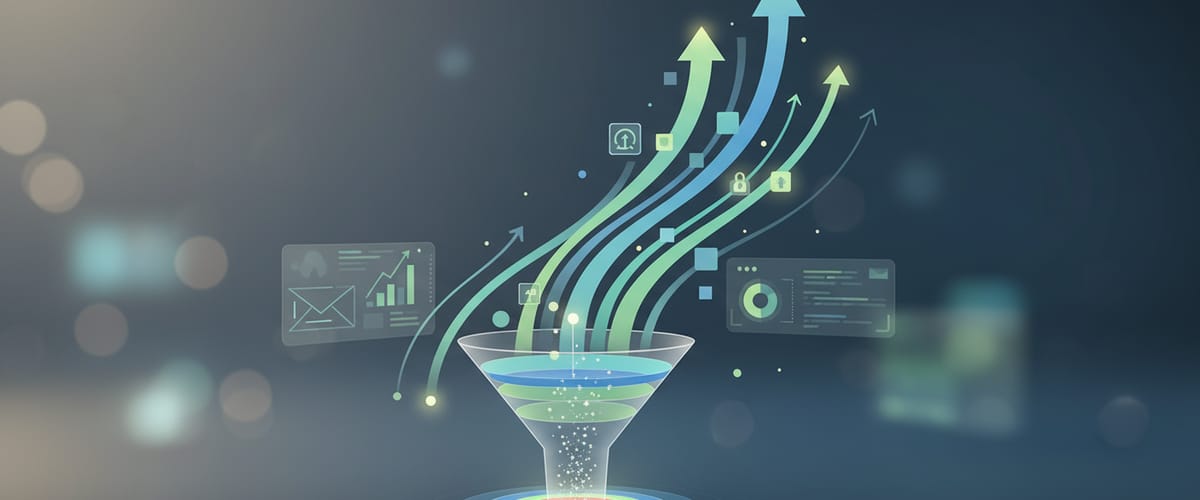
A funnel is simply the path someone takes from first hearing about you to becoming a customer. When you design this path intentionally, conversion rates multiply.
Awareness
Content, social media, ads, referrals. People discover you exist.
Interest
Lead magnet, free resource, webinar. They exchange attention for value.
Consideration
Email sequences, case studies, testimonials. They evaluate whether you can help.
Decision
Sales page, demo, consultation. They decide to buy or not.
Retention
Onboarding, support, upsells. Existing customers become repeat buyers and advocates.
The Lead Magnet Funnel
This is the most common and effective funnel for digital businesses. You offer something valuable for free — a guide, template, checklist, mini-course, or tool — in exchange for an email address. The lead magnet should solve a specific, immediate problem for your target audience. It should be actionable, not just informational. Something they can use today and see results from.
After the opt-in, your welcome email sequence does the selling. The lead magnet builds trust by demonstrating your expertise. The email sequence nurtures that trust until the person is ready to invest in your paid offering. This funnel works because it lets people experience your value before committing money.
The Webinar Funnel
For higher-ticket offerings, a webinar funnel provides the depth needed to justify the price. You promote a free training event, deliver genuine value during the webinar, and present your offer at the end. The webinar can be live for intimacy and interaction, or automated for scalability. Many businesses start with live webinars to refine their pitch, then transition to automated versions once they have found what resonates.
The key metric is the show-up rate. Getting registrations is step one; getting people to actually attend is step two. Reminder sequences — email and SMS — the day before and the hour before dramatically improve attendance. Follow-up sequences for those who registered but did not attend give you a second chance at conversion.
Social Media with Process
Social media without a process is a time sink. Social media with a process is a growth engine. The difference is in how you plan, create, and distribute content.
Content Pillars
Define three to five content pillars — the core topics you consistently create content about. Every post should fit into one of these pillars. This framework eliminates the daily "what should I post?" problem. Your pillars should align with your expertise, your audience's interests, and your business goals. For example, a marketing consultant might use pillars like: email strategy, funnel design, case studies, industry trends, and behind-the-scenes process. With pillars defined, content planning becomes a matter of rotating through them rather than inventing from scratch.
Batch Creation
Create content in batches, not one piece at a time. Set aside one day per week or one block per week for content creation. During that block, create all the content for the coming week or even the coming month. Batch creation is faster because you stay in creative mode instead of constantly switching between creating and distributing. It also creates a buffer that prevents the stress of needing to post something right now with nothing prepared.
Distribution System
Scheduling tools like Buffer, Hootsuite, or Later let you queue content in advance. But distribution is more than just scheduling. A good distribution system includes repurposing — taking one piece of content and adapting it for multiple platforms. A blog post becomes a LinkedIn article, which becomes a Twitter thread, which becomes Instagram carousel slides. One idea, multiple formats. This multiplies your reach without multiplying your effort.
Conversion-Oriented Websites
Your website is not a brochure. It is a machine. Every page should have a purpose, and that purpose should be moving visitors closer to a specific action — signing up, booking a call, making a purchase, or downloading a resource. Pages without a clear call to action are wasted real estate.
The structure of a conversion-oriented homepage follows a predictable pattern. Start with a clear headline that communicates what you do and for whom. Follow with social proof — testimonials, client logos, or results data. Then present your offer with the benefits clearly stated. End with a strong call to action. This is not a template to follow blindly, but a framework that works because it matches how people actually make decisions.
Page speed matters more than design aesthetics. A page that loads in one second converts three times better than a page that loads in five seconds. Mobile responsiveness is not optional — over sixty percent of web traffic is mobile. Accessibility is not just ethical, it is good business — accessible websites rank better in search and convert a wider audience.
Metrics That Matter
Vanity metrics feel good but mean nothing. Focus on the numbers that directly connect to business outcomes.
Customer Acquisition Cost (CAC)
Total marketing spend divided by number of new customers. This tells you how efficiently your marketing converts dollars into customers. Track this monthly and aim to decrease it over time as your systems improve.
Email Conversion Rate
Percentage of email subscribers who become customers. This measures the effectiveness of your nurture sequences. A healthy rate depends on your price point, but two to five percent is a solid benchmark for most digital products.
Lifetime Value (LTV)
Total revenue from a customer over their entire relationship with your business. When LTV is three times or more your CAC, you have a sustainable growth engine. This ratio is the single most important metric for long-term business health.
Traffic to Lead Rate
Percentage of website visitors who become leads by providing their email or contact information. This measures how compelling your lead magnets and calls to action are. Two to five percent is average; above ten percent is excellent.
Complete Marketing Stack
Here is a complete, integrated marketing stack that covers every stage of the customer journey. Start with the essentials and add tools as your needs grow.
Website and Landing Pages
Astro / Next.js for the main site. Carrd or Framer for quick landing pages. Vercel for hosting with excellent performance and zero-config deployment.
Email Marketing
ConvertKit for automation and sequences. Beehiiv if newsletter is your primary channel. Both integrate with landing page builders and support behavior-based automation.
Social Media Management
Buffer for scheduling across platforms. Canva for visual content creation. CapCut for video editing. Typefully for Twitter/X thread creation.
Analytics
Plausible or Fathom for privacy-friendly web analytics. Google Search Console for SEO data. Hotjar for user behavior heatmaps and session recordings.
Automation
Make for connecting tools and building workflows. Zapier for simple integrations. Both connect your email, CRM, social media, and analytics into a unified system.
Community and Sales
Skool for community and courses. Cal.com for booking consultations. Stripe for payments. Lemon Squeezy for digital product sales with built-in tax handling.